
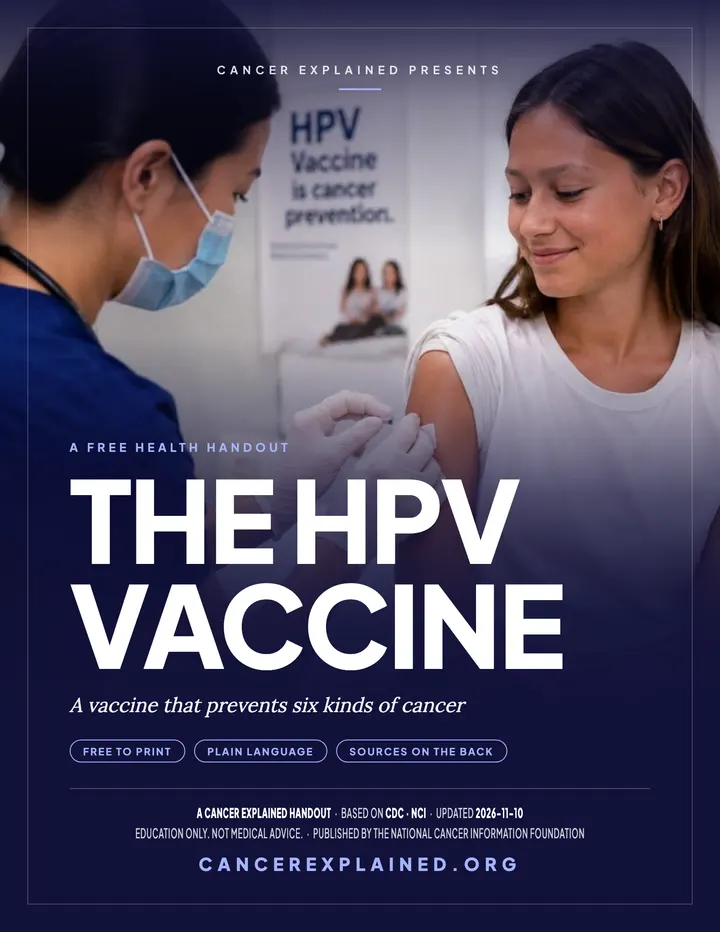
CancerExplained.org · Free health handout
The HPV Vaccine
A vaccine that prevents six kinds of cancer
What it does
- HPV is a very common virus. Most infections go away on their own, but some last and can cause cancer years later.
- HPV can cause cancers of the cervix, vagina, vulva, penis, anus, and the back of the throat.
- CDC says HPV vaccination can prevent more than 90% of the cancers caused by HPV.
Who should get it, and when
- All children at age 11 or 12. It can be given as early as age 9.
- First dose before the 15th birthday: 2 doses, 6 to 12 months apart.
- First dose at 15 to 26: 3 doses. People 9 to 26 with a weakened immune system also need 3.
- Everyone through age 26 who is not fully vaccinated.
- Ages 27 to 45: CDC does not recommend it for everyone. Some adults who are not vaccinated may decide to get it after talking with their doctor.
Good to know
- It works best when given before any exposure to the virus. That is why it is given at 11 or 12.
- Common side effects are a sore arm, and sometimes dizziness or fainting. Sitting for 15 minutes after the shot helps.
- The vaccine does not treat an HPV infection you already have.
- Cervical cancer screening is still needed after vaccination.
Questions to ask
- Is my child, or am I, up to date on HPV vaccine doses?
- When is the next dose due? ____________
- Is the vaccine free for us through insurance or the Vaccines for Children program?
Two or three shots now can prevent six kinds of cancer later. Ask at the next checkup.
This handout is for education only and is not medical advice. Talk with a qualified healthcare professional about what is right for you.
Sources: CDC: HPV vaccination · CDC: Cancers caused by HPV · NCI: HPV vaccines. Updated 2026-11-10.
Learn more in plain language: https://cancerexplained.org/essentials/vaccines-that-prevent-cancer/ — free to copy and share for non-commercial education.