
Persistent Skin Redness, Warmth, or Flushing
How doctors evaluate persistent skin redness, warmth, or flushing — persistence, progression, common non-cancerous causes, and when to consult a doctor.
Quick answer: what to know
This symptom is very common and is vastly more likely to be caused by a benign, non-cancerous condition. However, if it is persistent (lasting longer than 2 to 4 weeks) or progressive (getting steadily worse), you should have it evaluated by a healthcare professional.
Call 911 now
Flushing with swelling of your lips, tongue or throat, a tight chest, wheezing, difficulty breathing, or feeling faint — this can be a severe allergic reaction. Separately, a hot red area of skin that is spreading over hours with fever, severe pain, or skin turning purple or blistered needs emergency assessment.
🔍 How Doctors Evaluate This Symptom
Most symptoms are far more commonly caused by benign, non-cancerous conditions. When a change in your body is being assessed, two things matter most:
Occasional flushing with heat, exercise, alcohol or emotion needs no watch period at all. Flushing episodes that keep happening over 4 to 6 weeks with no clear trigger, or redness in one fixed area that stays for more than a week, should be reviewed — and sooner if the flushing comes with diarrhoea, wheezing, palpitations or weight loss, which together suggest a hormone-producing tumour rather than skin disease.
Episodes become more frequent, last longer, spread from face to neck and chest, start happening at night or at rest, or begin bringing diarrhoea, cramping or wheezing with them. Fixed redness that spreads outwards day by day is a different and more urgent pattern.
Rosacea, menopausal hot flushes, alcohol, spicy food, exercise, anxiety, and drugs including niacin, calcium channel blockers, nitrates and some antidepressants explain most flushing. Persistent redness in one area is more often cellulitis, eczema, contact dermatitis, sunburn or seborrhoeic dermatitis.
A more common cause is not a reason to wait. A symptom that is new, lasts, or gets worse should be checked by a doctor. If it is severe or sudden, call 911 (US) or go to the nearest emergency department.
Representative Scenario: Evaluating Persistent Skin Redness, Warmth, or Flushing
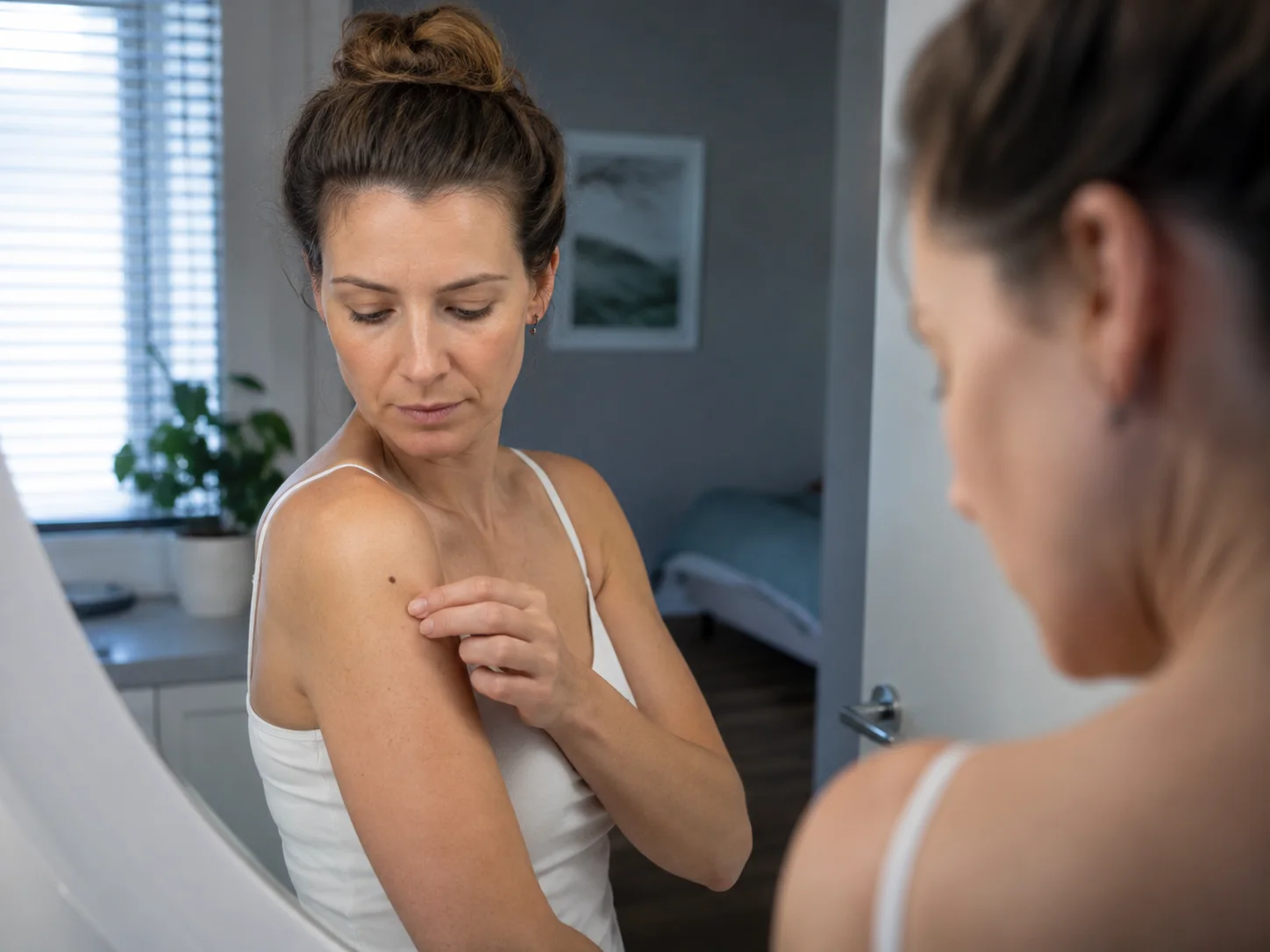
An individual notices persistent skin redness, warmth, or flushing and schedules an evaluation with their doctor to review their health history.
Common causes that are not cancer
Before considering rare explanations, healthcare providers first check for common, harmless (benign) causes, such as:
Rosacea, menopausal hot flushes, alcohol, spicy food, exercise, anxiety, and drugs including niacin, calcium channel blockers, nitrates and some antidepressants explain most flushing. Persistent redness in one area is more often cellulitis, eczema, contact dermatitis, sunburn or seborrhoeic dermatitis.
When cancer may be considered
Doctors consider cancer as a possibility mainly when a symptom is persistent (does not resolve after 2–4 weeks of standard care), progressive (steadily worsening), or accompanied by associated changes like unexplained weight loss, fever, night sweats, or a hard lump.
Details that matter to your doctor
- Exact date when you first noticed the change.
- Whether the symptom is constant or comes and goes.
- Whether anything makes the symptom better or worse.
- Any family history of similar health conditions.
What not to do
- Do not repeatedly self-treat a persistent symptom with over-the-counter remedies without getting evaluated.
- Do not attempt to self-diagnose using online images or automated symptom quizzes.
- Do not assume a symptom is harmless simply because it is painless.
- Do not delay emergency care if you experience severe shortness of breath or heavy bleeding.
What a clinician may ask or check
Your doctor will usually ask about your health history, do a physical exam, and review your medicines. If needed, they may order blood tests or imaging scans to find the cause.
Prepare for your doctor visit
Generate a personalized, printable list of questions tailored to Persistent Skin Redness, Warmth, or Flushing to bring to your appointment.
Build My Appointment Question List →Authoritative Primary Source
This guide is based on official guidance published by the National Cancer Institute ↗