


The short answer
Melanoma often shows up as a new or changing mole. The ABCDE rule — Asymmetry, Border, Color, Diameter, Evolving — helps spot warning signs. Early melanoma is usually treated with surgery.
Melanoma often appears as a new mole or a change in an existing mole.
The ABCDE rule helps: Asymmetry, Border, Color, Diameter, Evolving.
A spot that itches, hurts, bleeds, oozes or breaks down is worth showing a doctor.
Melanoma can develop anywhere on the skin, including under the nails, on the palms and soles, in the mouth and in the eyes.
Choose how you want to read this
The whole article, with every detail and caution.
This page is for anyone who has noticed a spot on their skin and wonders if it could be melanoma. It explains the warning signs to look for, the places people forget to check, and when to see a doctor.
The two questions that matter most
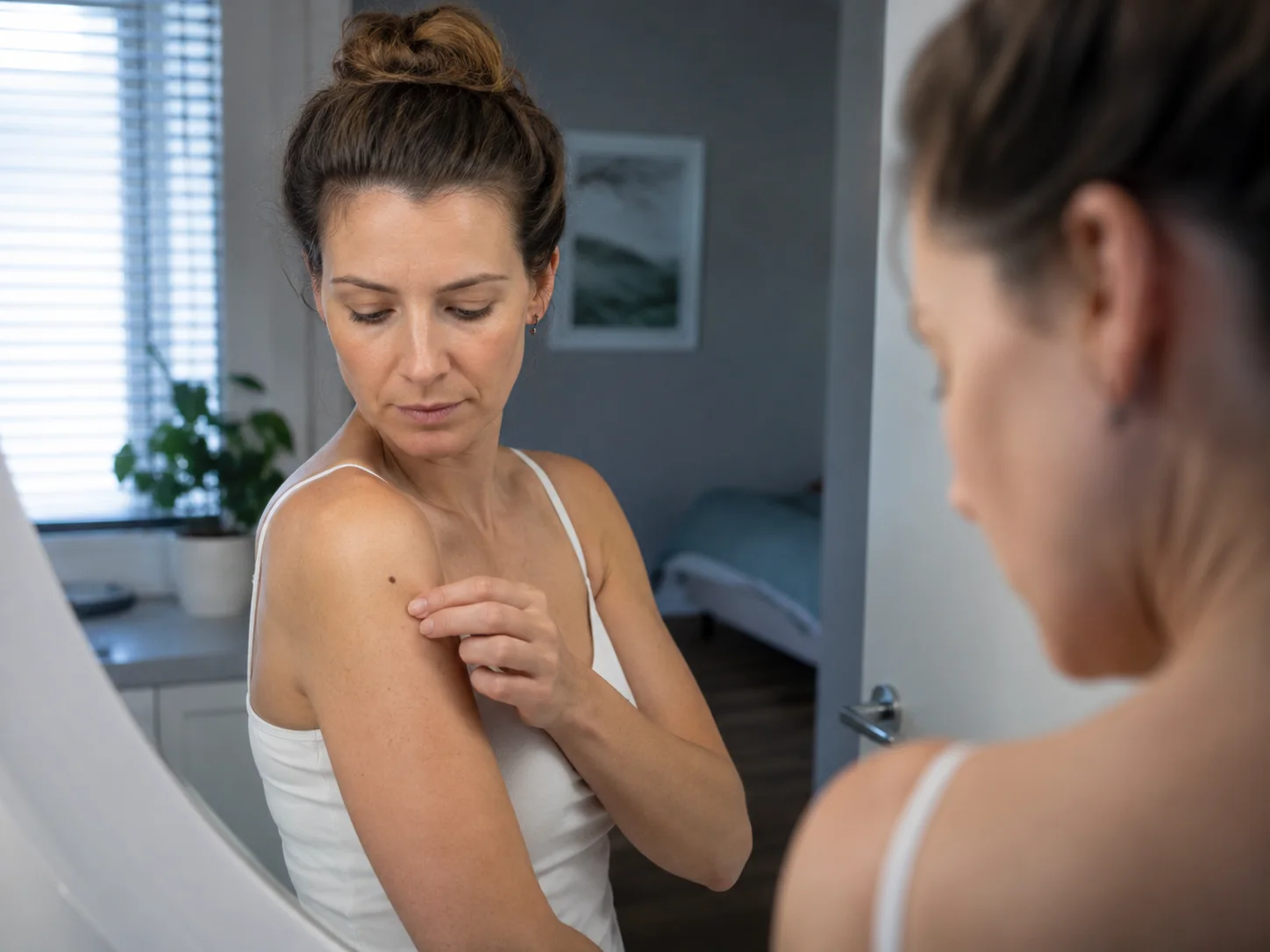
Most melanoma starts as a change you can see. Two questions guide what to look for. Is this spot new? And is it changing? A new spot, or one that is shifting in size, shape, or color, is what needs a closer look.
The ABCDE rule
Doctors use five letters to describe warning signs in a spot:
- A — Asymmetry. One half does not match the other half.
- B — Border. The edges are often ragged, notched, or blurred.
- C — Color. Shades of black, brown, and tan may be present. Areas of white, gray, red, pink, or blue may also be seen.
- D — Diameter. NCI says melanomas can be tiny, but most are larger than the size of a pea (larger than 6 millimeters, or about 1/4 inch). A small spot is not automatically safe.
- E — Evolving. The mole has changed over the past few weeks or months.
A spot does not need to match every letter to be worth checking. If you notice changes in your skin, talk to a doctor.
Other changes to watch for
Melanoma does not always look like a classic dark, asymmetric mole. NCI says the surface may change in texture, break down, become hard or lumpy, ooze, or bleed. Sometimes melanoma is itchy, tender, or painful.
Places people forget to check
NCI says melanoma can develop anywhere on the skin, and also under the nails, in the mouth and in the eyes. It can also develop on the palms and soles. These places are easy to miss in a quick look in the mirror. Ask your doctor to check them if you notice a change.
Why acting on a suspicious spot matters
NCI says stage 0 and stage I melanoma are treated with surgery. The goal is not to worry over every mole. It is to know which changes are worth a prompt appointment rather than a wait-and-see approach.
What to ask your team
- Can you check this spot, and should you also check my palms, soles, nails, and scalp?
- Is a biopsy needed, or can this be watched and re-checked later?
- Given my skin type and history, how often should I have a full skin exam?
- If a mole changes between visits, how soon should I come back?
Sources

Common questions
What does melanoma look like?
It often appears as a new mole or a change in an existing one. The ABCDE rule describes warning signs: Asymmetry, irregular Border, uneven Color, large Diameter, and Evolving (changing over time).
Does a spot have to match every ABCDE sign?
No. If a spot worries you or is changing, show it to a doctor, even if it does not match every sign.
Where can melanoma appear?
NCI says melanoma can develop anywhere on the skin, including under the nails, on the palms and soles, in the mouth and in the eyes.
How is early melanoma treated?
NCI says stage 0 and stage I melanoma are treated with surgery. See our melanoma treatment page. Checking new or changing spots matters.
Questions to ask your doctor
Being prepared helps you get the most out of your appointments. Save or print these questions.
Tap a question to save it to your list (kept on this device).
Talk with a trained specialist or navigator
Cancer Explained provides educational guidance, but does not replace trained specialists, social workers, or your medical team.
Talk to a trained cancer information specialist
Free, confidential assistance from NCI Cancer Information Service via phone, chat, or email.
Contact your oncology team
Locate after-hours contact numbers, portal messages, or urgent triage phone lines.
Find a patient navigator
Get one-on-one help with appointments, logistics, translation, and care coordination.
Find a genetic counselor
Discuss inherited mutation risk, family history, and genetic testing options.
Find an oncology social worker
Access emotional counseling, family support groups, and mental health resources.
Find a financial navigator
Locate copay assistance foundations, grant programs, and lodging/travel support.
Find a clinical-trial specialist
Search matching studies and speak with NCI trial information specialists.
Get urgent help
Severe trouble breathing, chest pain, or any other emergency: call 911 now. Fever of 100.4°F (38°C) or higher during chemo, or severe pain: call your cancer care team right away, day or night.