
NewsMovies & TV
No, Aerosol Sunscreen Isn't 'the New Second-Hand Smoke' — What the Skin Cancer Evidence Actually Shows
A viral Instagram Reel claims spray sunscreen is as dangerous as second-hand smoke and that sun exposure is 'medicine.' Here's what CDC, FDA, and NCI evidence actually says about sunscreen, UV exposure, and skin cancer risk.
Original commentary from the Cancer Explained editorial team.

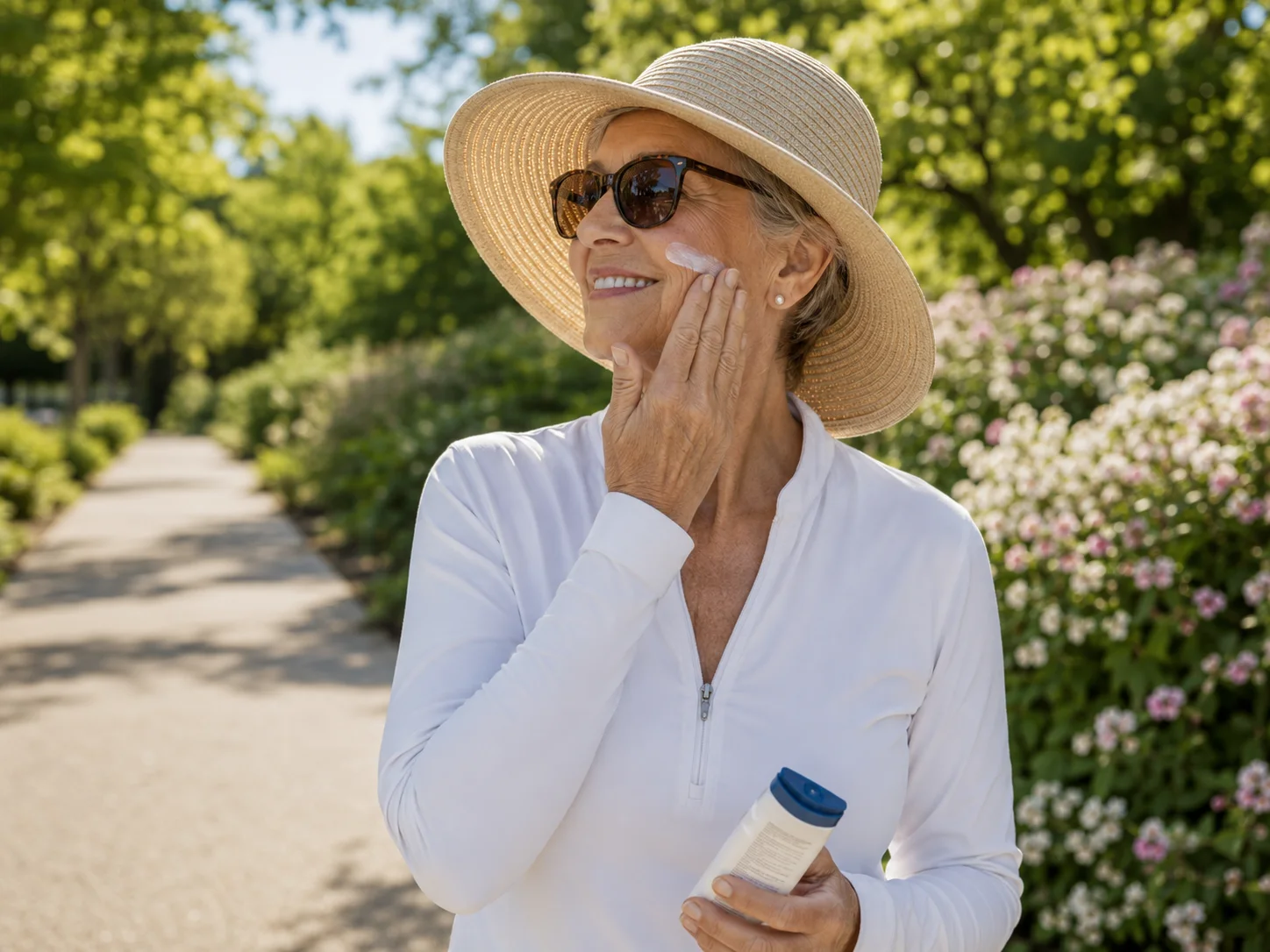
Please note: this page is educational only — it is not medical advice, and it does not speculate about anyone’s health beyond reliable public reporting. For questions about your own health, talk with your healthcare team.
“Mainstream media is finally saying what us 'conspiracy theorists' have been saying for years: chemicals in sunscreen cause cancer.”
Nothing has loaded from Instagram. We do not connect you to Meta unless you ask, because that would let them set cookies through this page. Open it on Instagram instead.
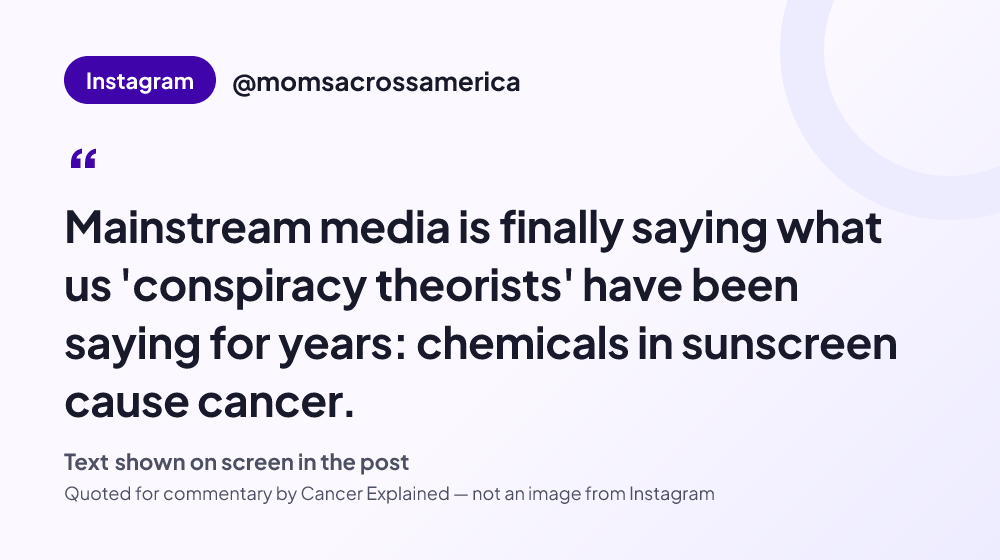
A viral Instagram Reel from "momsacrossamerica" claims people fear the sun more than "what we're putting on our skin and breathing into our lungs." It calls aerosol sunscreen "the new second-hand smoke." It frames sun exposure as "medicine" for vitamin D and health. It urges daily unprotected sun. It attacks sunscreen, especially sprays, as more dangerous.
It's a compelling piece of content. It taps into a common frustration: sticky, chemical-smelling sunscreen. It offers a simpler, "natural" fix: just get some sun. But the claim mixes up two different things. One is a real, narrow safety question. Is inhaling aerosol spray a good idea? The other is a much bigger, well-settled one. Is avoiding sunscreen and getting more unprotected sun good for long-term health? On that larger claim, the video runs against the weight of federal cancer-prevention guidance.
What actually causes skin cancer
UV radiation from the sun is the main preventable cause of skin cancer, especially melanoma. The National Cancer Institute says UV exposure causes early aging and damage that leads to skin cancer. It recommends sunscreen with SPF at least 15 (many doctors prefer 30+). Apply it to exposed skin. Reapply every two hours, or after swimming.
The Centers for Disease Control and Prevention (CDC) goes further. It lays out a layered protection plan: broad-spectrum sunscreen of SPF 15 or higher, seeking shade, long sleeves and pants when practical, a wide-brimmed hat, and UV-blocking sunglasses. The CDC's core message is direct: "protecting your skin from too much sun every day will help lower your skin cancer risk." Skin cancer is also the most common cancer diagnosed in the United States. It's highly treatable when caught early. But melanoma can be life-threatening if it spreads.
Concern about inhaling spray sunscreen is real. But it's separate from whether sunscreen harms health overall. Regulators focus on avoiding inhalation during use (don't spray at the face). Choosing lotion or stick sunscreen sidesteps this worry without skipping protection.
Skin does make vitamin D when exposed to UV light, and vitamin D matters for bones and immunity. But major health authorities, including the American Academy of Dermatology, say most people get enough vitamin D through diet, fortified foods, and supplements — no UV exposure needed. The sun exposure needed for good vitamin D levels also raises skin cancer risk.
Two different questions, one video
The Reel is right that some people do avoid sunlight altogether, and that total, joyless avoidance of the outdoors isn't the goal of any credible health guidance. Moderate, protected time outside fits with (and is even part of) an evidence-based approach to health. It's also fair to note that some people prefer not to inhale aerosol products. That's a legitimate personal preference.
The video equates sunscreen with second-hand smoke danger and calls unprotected sun "medicine." Second-hand smoke is a proven human carcinogen. It causes lung cancer in non-smokers. No evidence shows sunscreen causes harm at that scale. The evidence linking cumulative unprotected UV exposure to skin cancer is extensive, from NCI, CDC, and international bodies. The video flips the actual risk order.
What a changing mole looks like
Because this Reel touches on skin cancer risk, it's worth knowing the warning signs. Most skin changes are not cancer. Watch for a mole or spot that is uneven on one side, has an irregular border, uneven color, or a size bigger than a pencil eraser, or is changing in size, shape, or color (the "ABCDE" rule). Also watch for a sore that doesn't heal, a new growth, or a spot that itches, bleeds, or feels different from the skin around it. Most moles, freckles, and skin irritations are harmless. But any new or changing spot deserves a look from a healthcare provider or dermatologist.
A middle ground between fear and no protection
You don't have to choose between "terrified of the sun" and "sunscreen-free." The CDC and NCI guidance is a sensible middle ground: use broad-spectrum sunscreen of SPF 15–30+ on exposed skin, reapply regularly, and pair it with shade, protective clothing, and sunglasses. This matters most during peak UV hours, roughly 10 a.m. to 4 p.m. If you dislike aerosol sprays — because of inhalation worries, environmental waste, or just preference — lotions, sticks, and mineral-based (zinc oxide or titanium dioxide) sunscreens work just as well and skip that issue entirely. For vitamin D, talk to a healthcare provider about diet, fortified foods, or supplements rather than relying on unprotected sun. And keep up with skin checks — both self-checks and regular exams by a provider — especially if you have fair skin, many moles, or a family history of skin cancer. The FDA and CDC both maintain public resources on sunscreen safety and skin cancer prevention for anyone who wants to dig deeper.
Reliable, evidence-based information like this doesn't happen by accident. Groups like the National Cancer Information Foundation work to keep it free and open to anyone trying to sort real cancer prevention advice from viral claims.
How this article was prepared
An AI-assisted editorial system helped prepare this page. No named medical reviewer has reviewed it unless one is listed.
Cancer Explained is published by the National Cancer Information Foundation. It is not medical advice and does not suggest a test or treatment.
See an error, old source, or unclear wording? Tell us.
Know someone who needs this?
Plenty of people are looking for something like this and do not know where to start. If this would help a friend or someone you love, send it on — we have written an opening line so you do not have to stare at an empty message. You can change every word of it.
Your message is written and sent in your own email or messaging app — we never see who you send it to, and nothing is added to any list.
Put the story in context
Prevention, possible warning signs, screening, and diagnosis
This story relates to melanoma. The information below is general: it does not reveal anything else about a public person’s health, and not every point applies to every cancer. Personal advice depends on age, symptoms, family history, exposures, and medical history.
Prevention and risk reduction
Not every cancer can be prevented. Avoiding tobacco, protecting skin from ultraviolet radiation, limiting alcohol, staying active, and receiving recommended HPV or hepatitis B vaccination can lower the risk of certain cancers. A risk factor is not a prediction or a cause in one individual.
Symptoms and possible early signs
Possible signs vary and are often caused by conditions other than cancer. Changes worth discussing include a new lump, unexplained bleeding or weight loss, a persistent cough, lasting bowel or bladder changes, a changing skin spot, or symptoms that persist or worsen. Some early cancers cause no symptoms.
Screening and early detection
Screening looks for certain cancers before symptoms begin. Recommended tests exist only for some cancers and depend on age and risk. Screening can have benefits and harms; it is not the same as evaluating a new symptom, and there is no single routine scan or blood test that reliably screens for every cancer.
How cancer is diagnosed
Diagnosis may involve a history and exam, imaging, laboratory tests, and often a biopsy. Pathology can identify the cancer type and may test biomarkers that guide treatment. Symptoms, screening results, tumor markers, or online stories alone cannot confirm cancer.
Learn about this story’s cancer topic
A public story may encourage questions, but it should not be used to estimate your risk or choose testing. Contact a healthcare professional about a persistent or concerning change. Seek urgent care for severe or rapidly worsening symptoms.